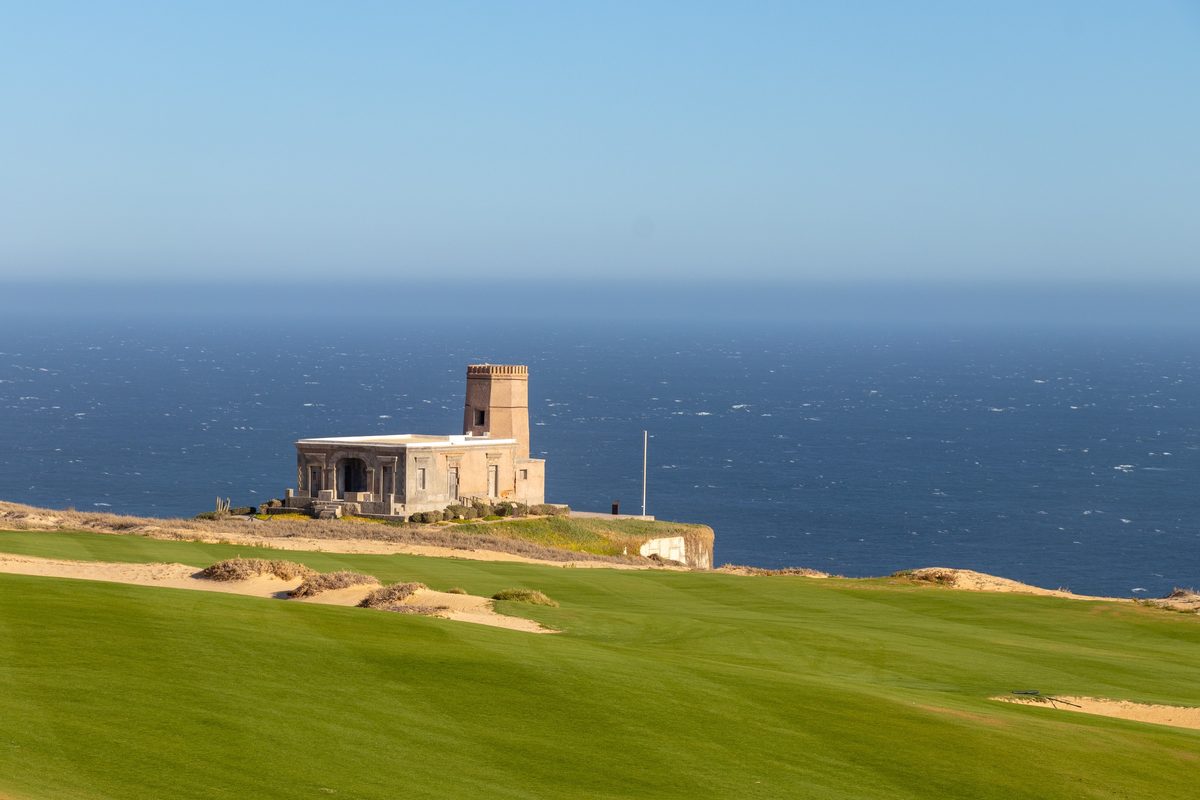
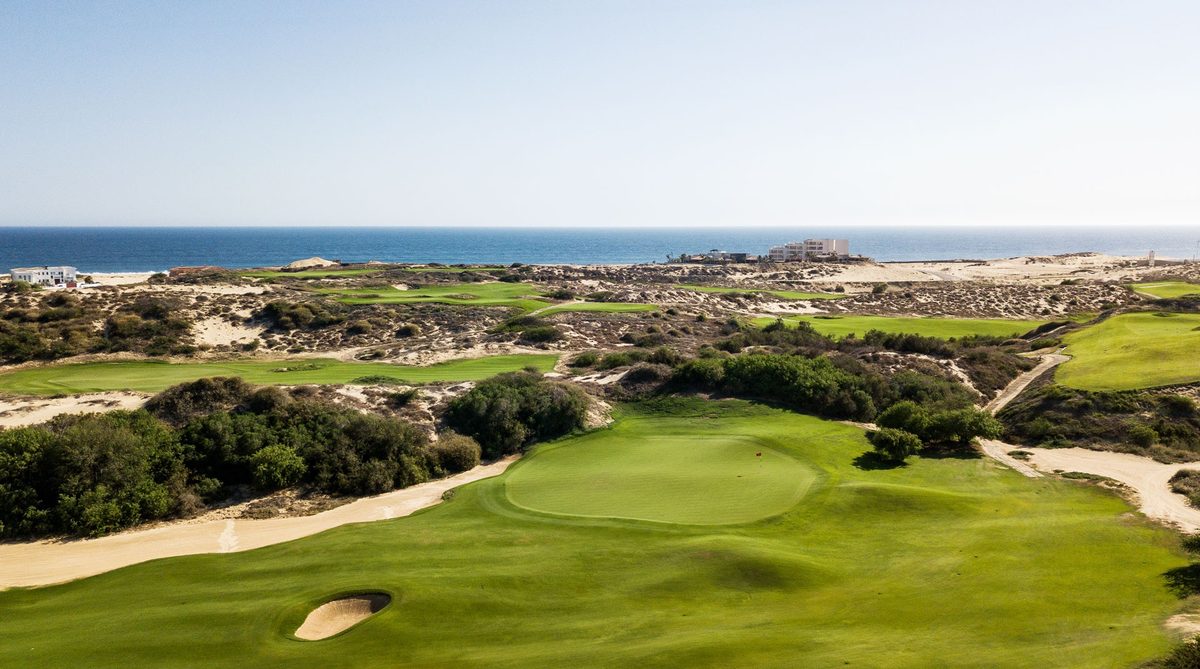
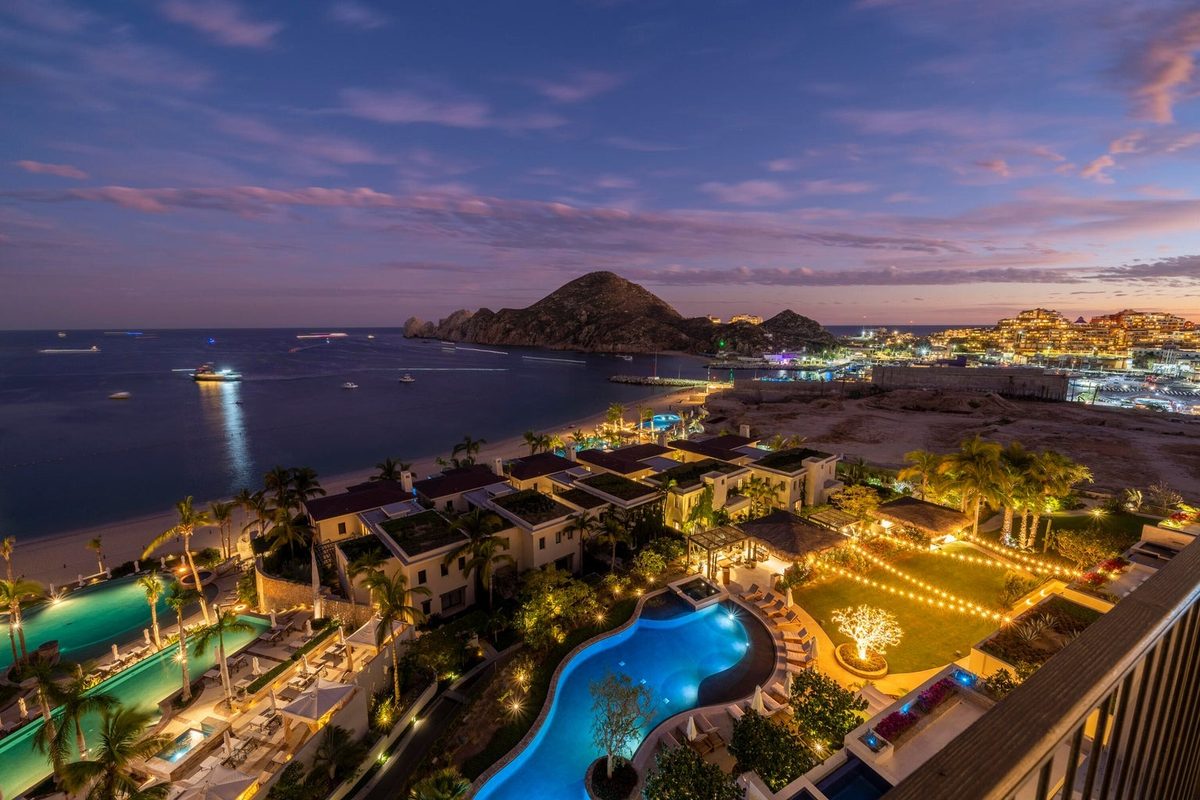
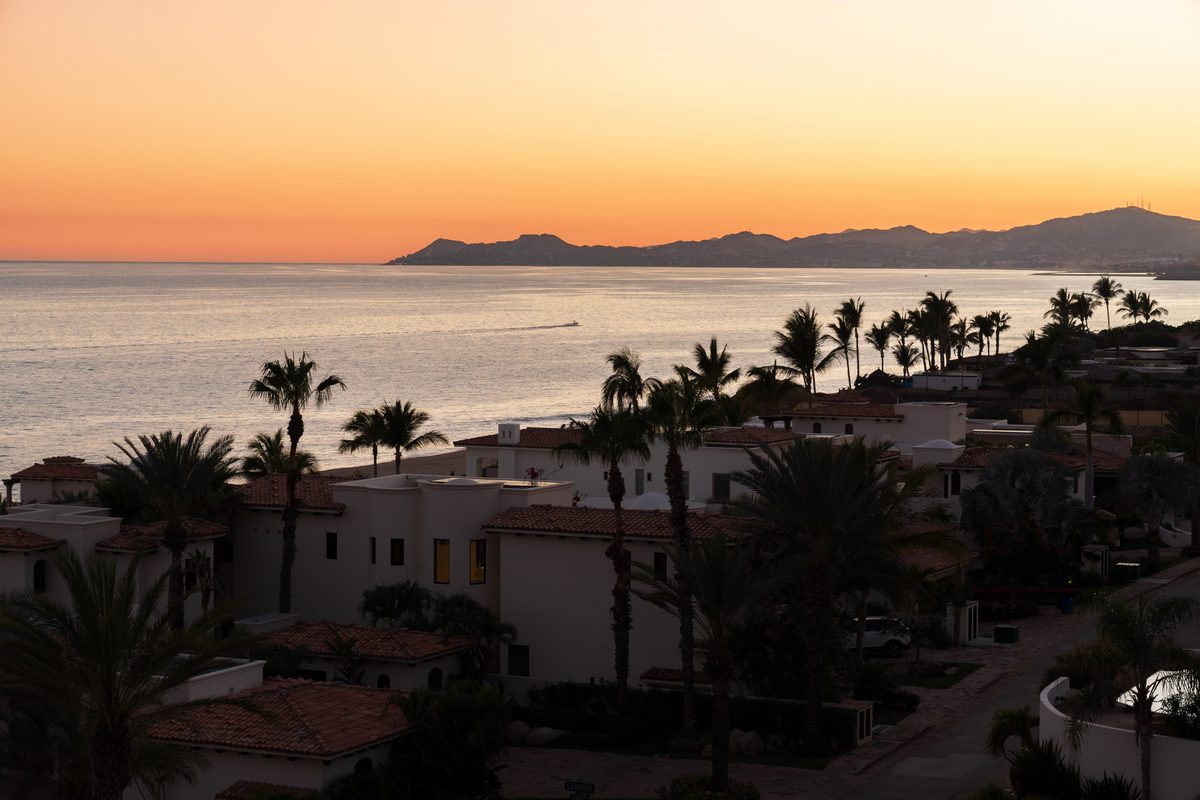
Golf is one of the clearest reasons people first look at Los Cabos, and for many it becomes the reason they stay. Few places hold a comparable concentration of signature-designed courses: Jack Nicklaus's name appears on more courses here than anywhere else in Latin America, starting with Palmilla in 1992 — his first design in the region — and extending to the cliffside course at Quivira. Tom Fazio, Tom Weiskopf and Greg Norman have each added a course of their own, and in 2014 Tiger Woods completed El Cardonal at Diamante, his first solo design anywhere. The courses split naturally along the coastline. Pacific-facing layouts cut through open dunes, close to the ocean's edge. Courses on the Sea of Cortez side sit along a calmer, more built-up corridor, mountains behind them and the water usually in view rather than underfoot. For a buyer, golf here is rarely just a sport — it shapes which community makes sense, how a week is structured, and what a property costs to keep.
The courses, by coast
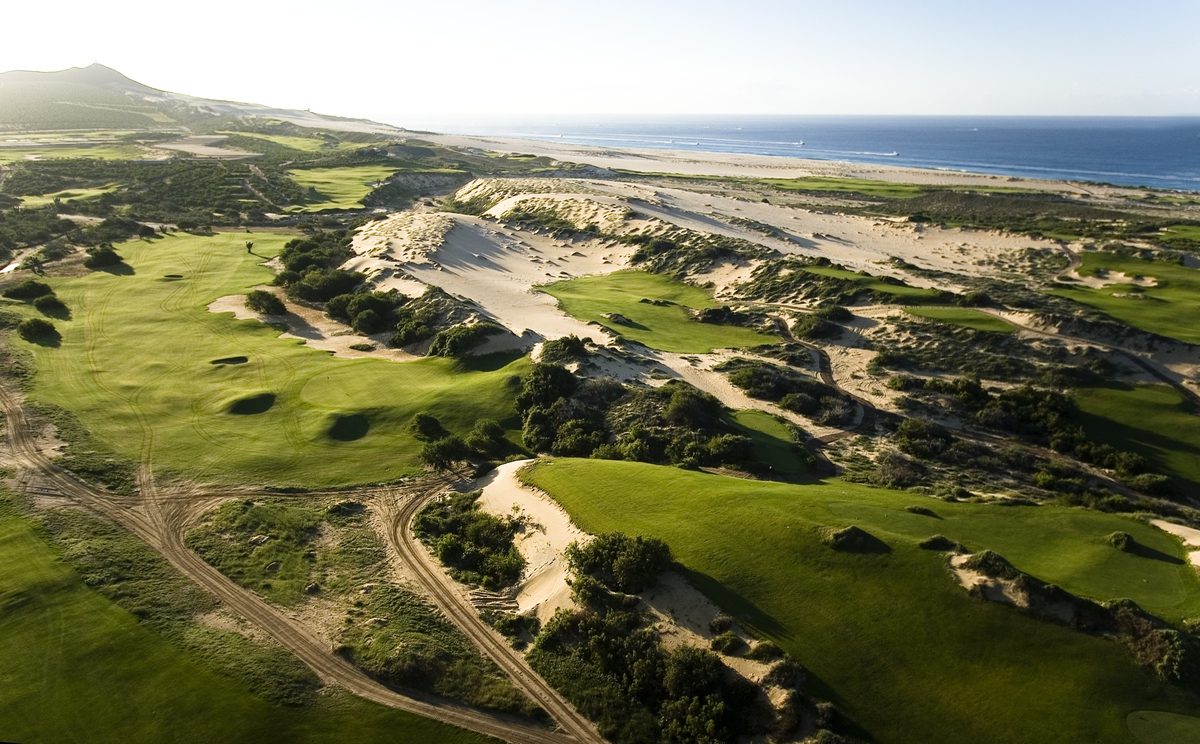
On the Pacific side, Diamante's two courses set the tone: El Cardonal runs through dunes and native vegetation, built as Tiger Woods's first completed solo design, while the neighbouring Dunes Course was Davis Love III's first design outside the United States. Corridor courses read differently. Cabo del Sol's Desert Course, originally designed by Tom Weiskopf and since updated, and Querencia's Tom Fazio design sit inland of the bluff, while Puerto Los Cabos combines two Nicklaus nines with a third by Greg Norman.
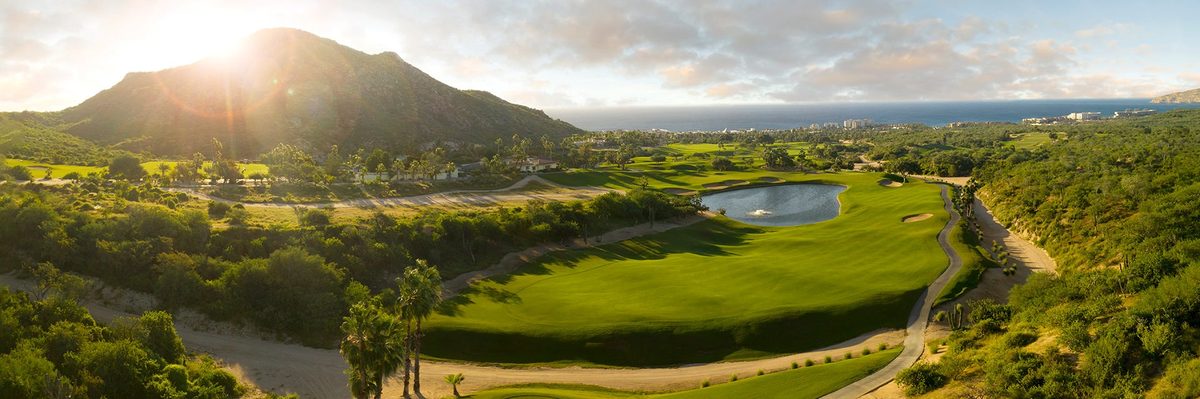
A corridor course, mountains on one side and the sea on the other
Club culture
Most courses here are private or semi-private, built around a clubhouse rather than a pro shop. Membership is often required to play regularly, sometimes bundled with a residence and sometimes available on its own. The clubhouse itself tends to be the real social centre — breakfast after an early round, lunch on a shaded terrace, a calendar of member events that runs well beyond golf.
A tee shot toward the water
Golf and ownership
Many of the region's residential communities grew up around a golf course, and the relationship between the two varies by development. Some tie a membership directly to the lot; others sell it separately, with its own waiting list and dues. Before buying into a golf community, it's worth asking exactly how membership works, what it costs beyond the purchase price, and whether it transfers with the home.
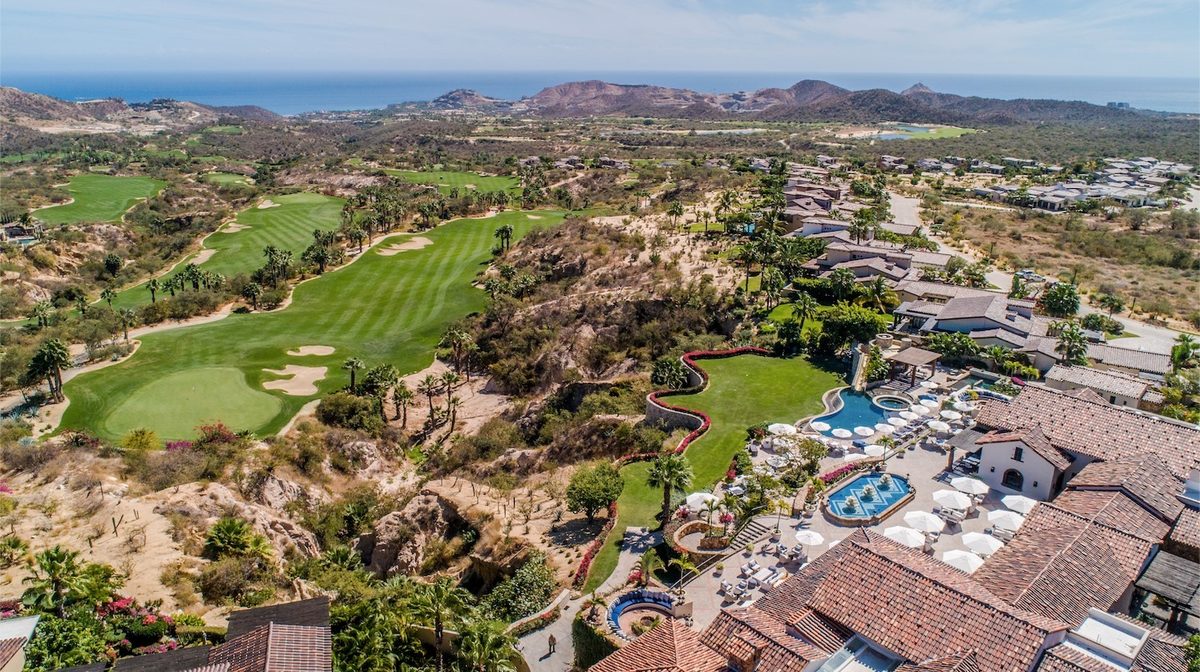
A fairway, a terrace, and the homes along it
A short iron into a green cut into the dunes, the Pacific right there — it's the shot most people remember first.
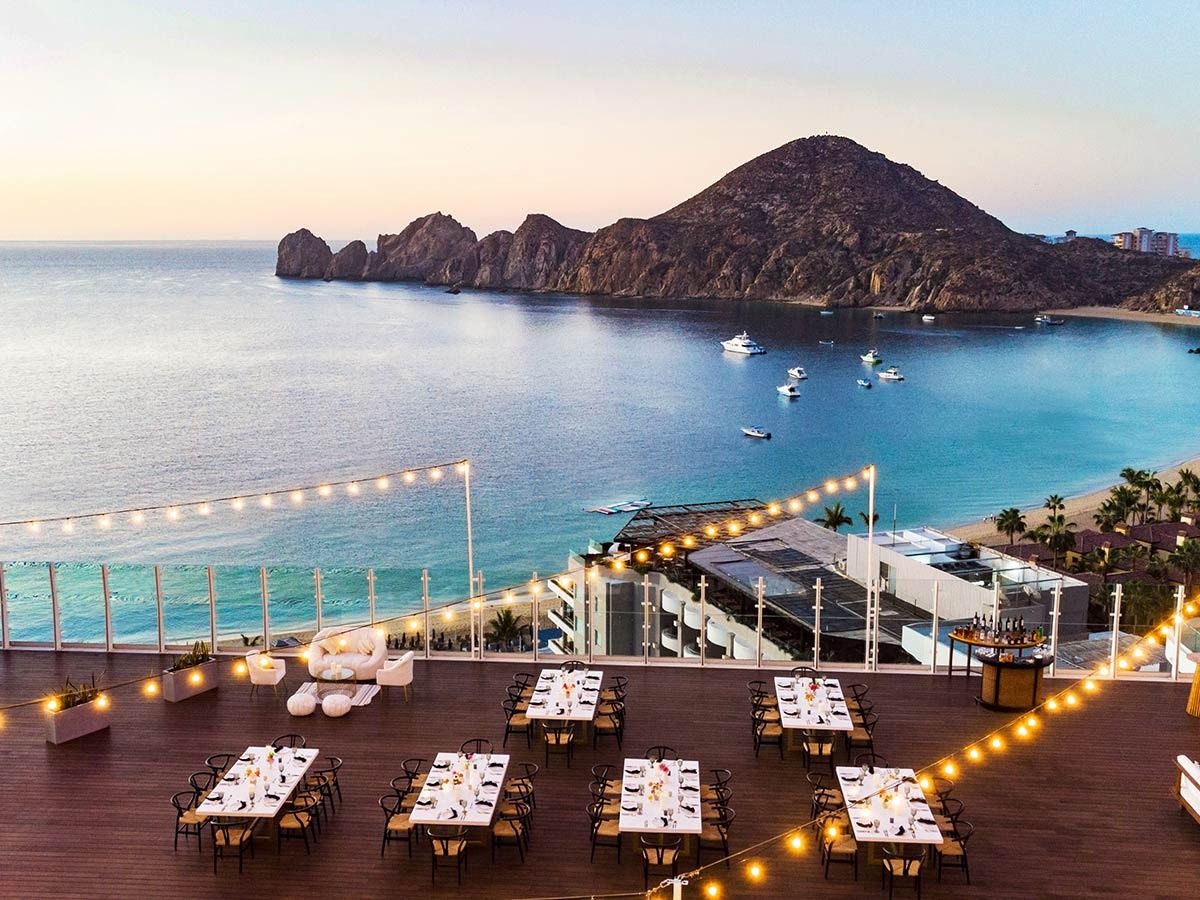
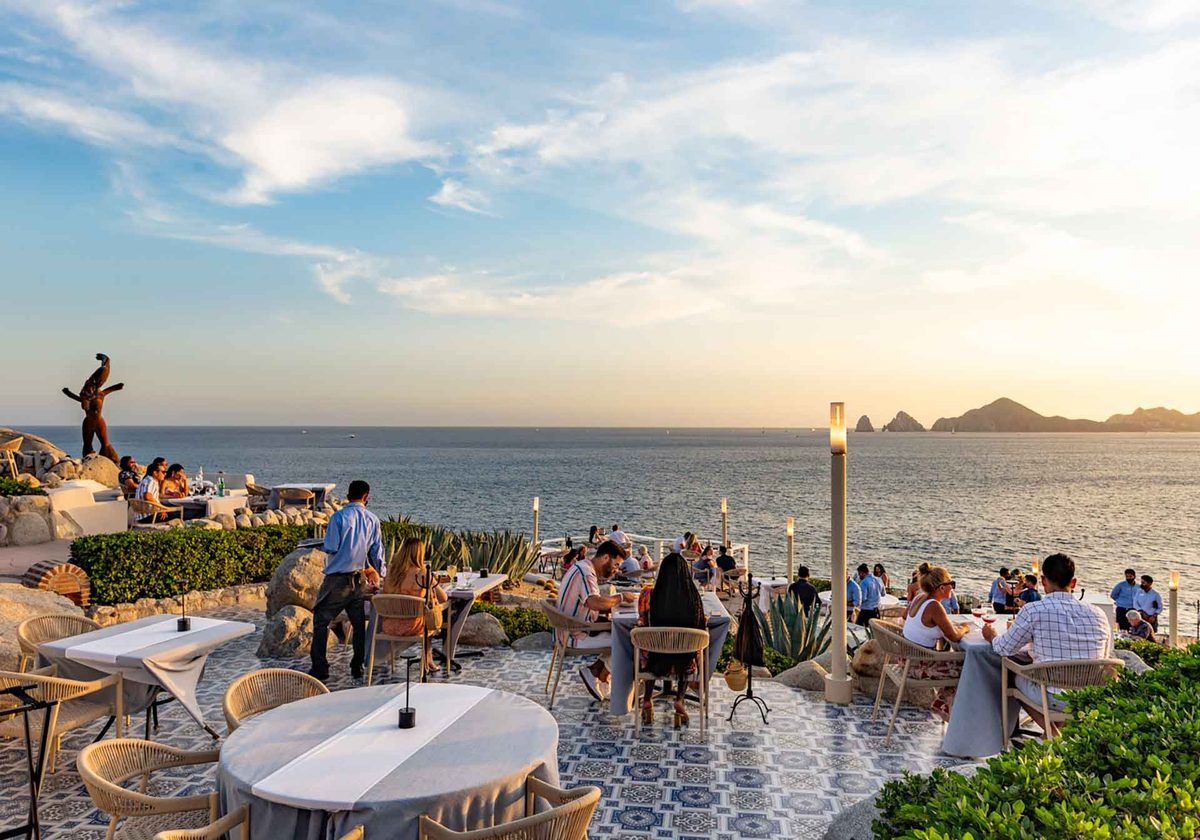
Los Cabos sits within reach of Baja Med, the fusion style that grew out of the wider Baja California peninsula — Mediterranean and Asian technique applied to local seafood, desert produce and citrus, pioneered by chefs working around Tijuana and the Valle de Guadalupe. Los Cabos didn't originate the movement, but its kitchens draw on it freely, pairing the morning's catch with olive oil, citrus and herbs rather than heavier preparations alone. The range runs wide: casual seafood near the marina, farm-forward tables around San José del Cabo, and ambitious tasting menus on clifftop terraces built for sunset. Meals tend to start late and run long, timed to the light rather than the clock. For residents as much as visitors, dinner is often the centre of the evening — the reason to get dressed, drive across town, or simply walk down to the beach.
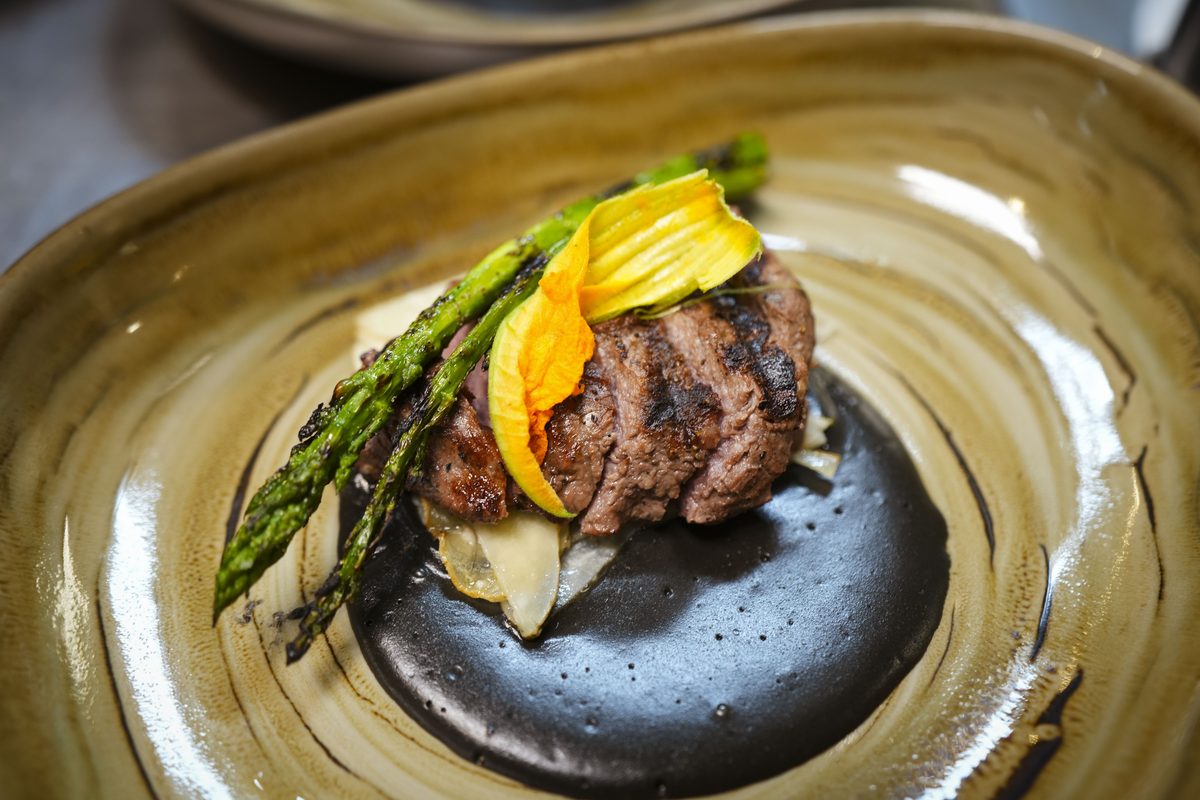
A Baja Med table
The style leans on what the peninsula actually produces: rockfish, scallops and tuna from two different seas, olives and wine from the valleys further north, and vegetables grown in small desert plots rather than shipped in. A kitchen working in this style treats a simple piece of fish as the main event, dressed lightly enough that the ingredient still reads.
Plating, mid-service
On the sand
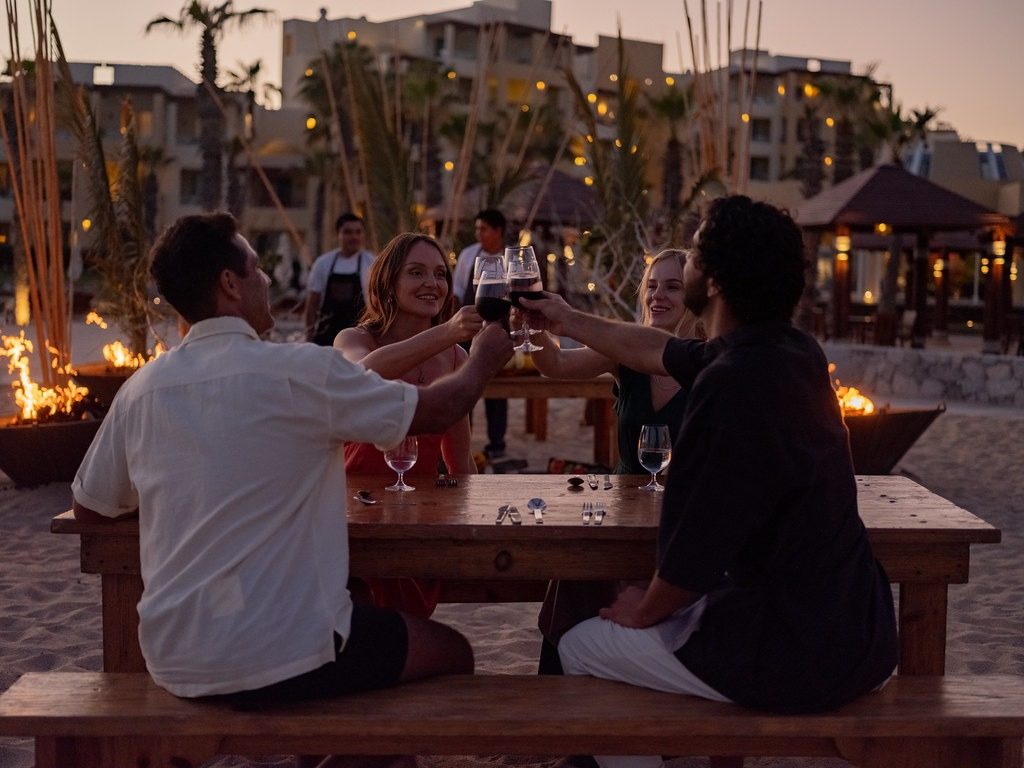
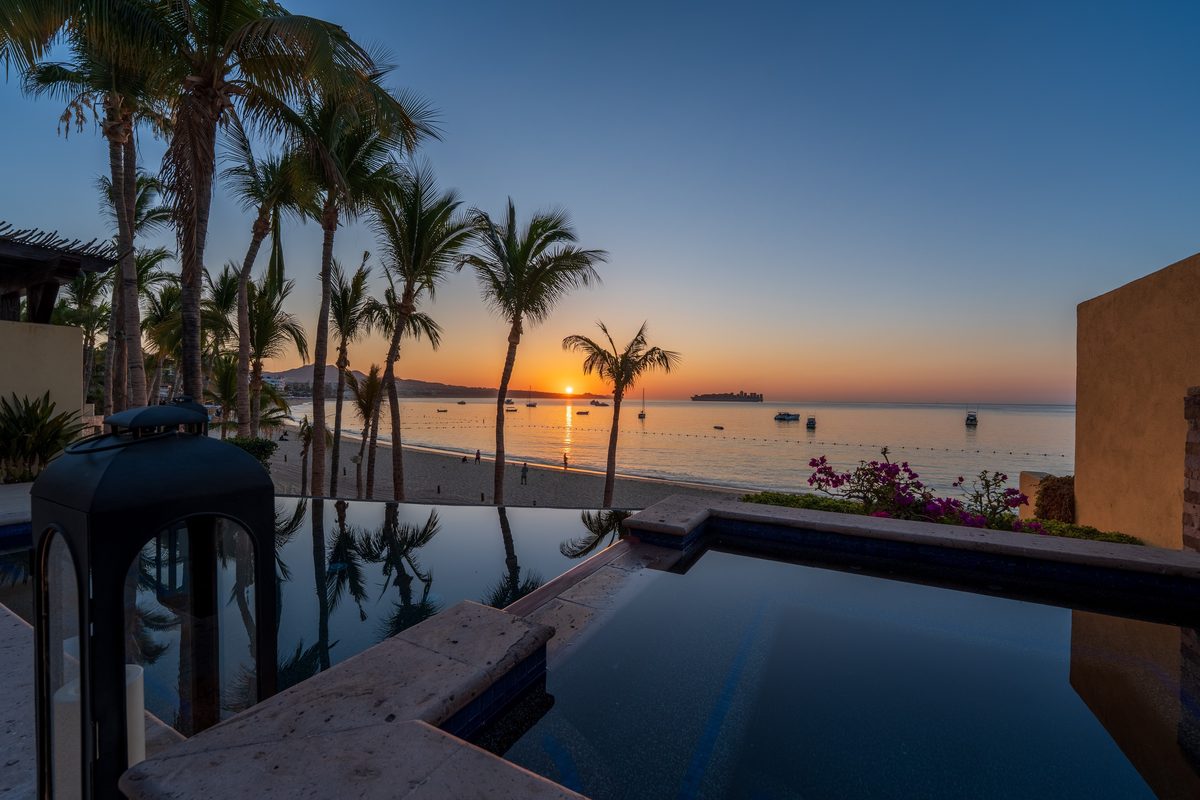
Beachfront dining is its own category here, from a barefoot lunch with a view of the surf to a reserved table set for dinner once the fire pits are lit. Sunset drives the schedule: the best tables face west, and reservations around that hour go first.
Dinner on the sand, after sunset
The plate
At its best, a Los Cabos plate is unfussy: something grilled or seared, a vegetable treated with the same care as the protein, a sauce that stays out of the way. The produce carries the dish more than technique does — a function of what grows and swims nearby, not a trend.
The plate: local, seasonal, simply put together
Dinner starts when the light does. Most tables worth having face west.
Médano Beach, Cabo San Lucas’s busiest stretch of sand
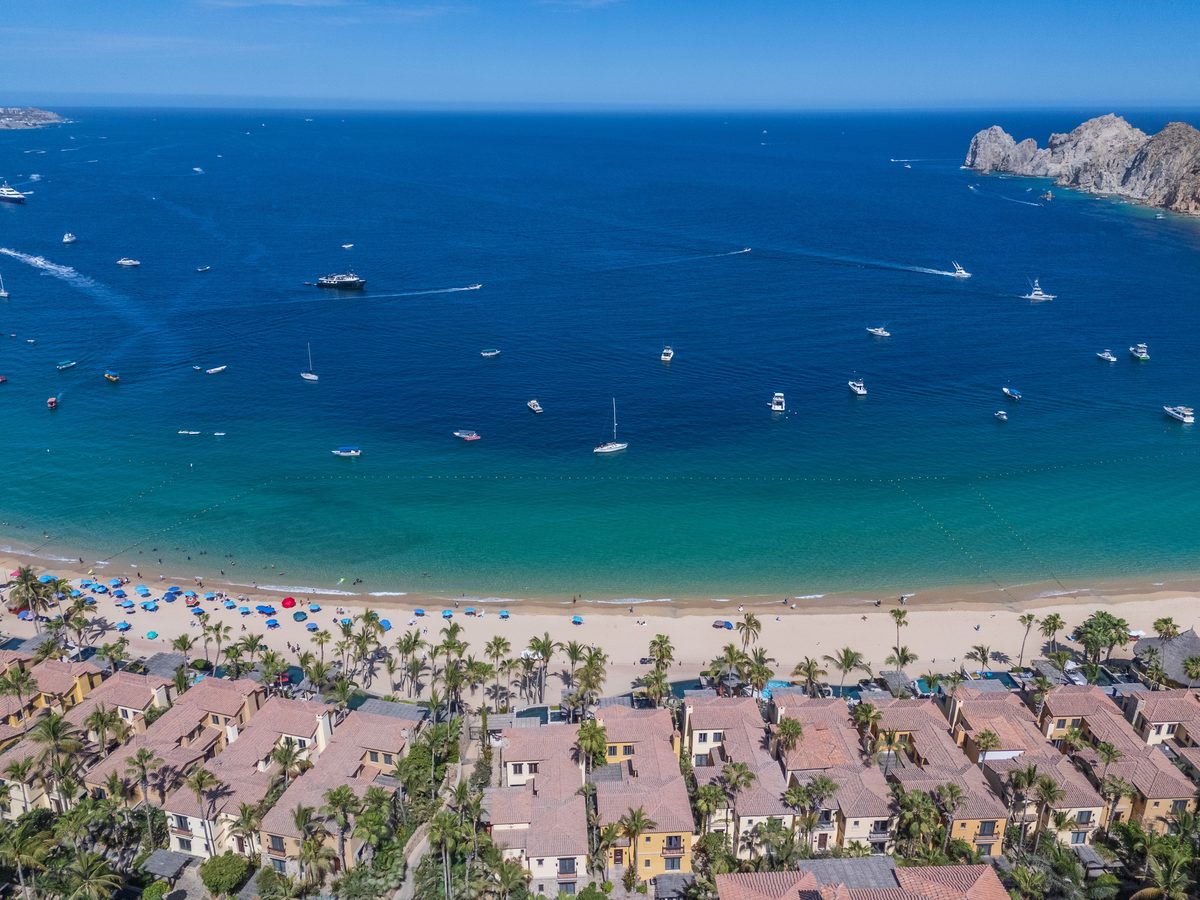
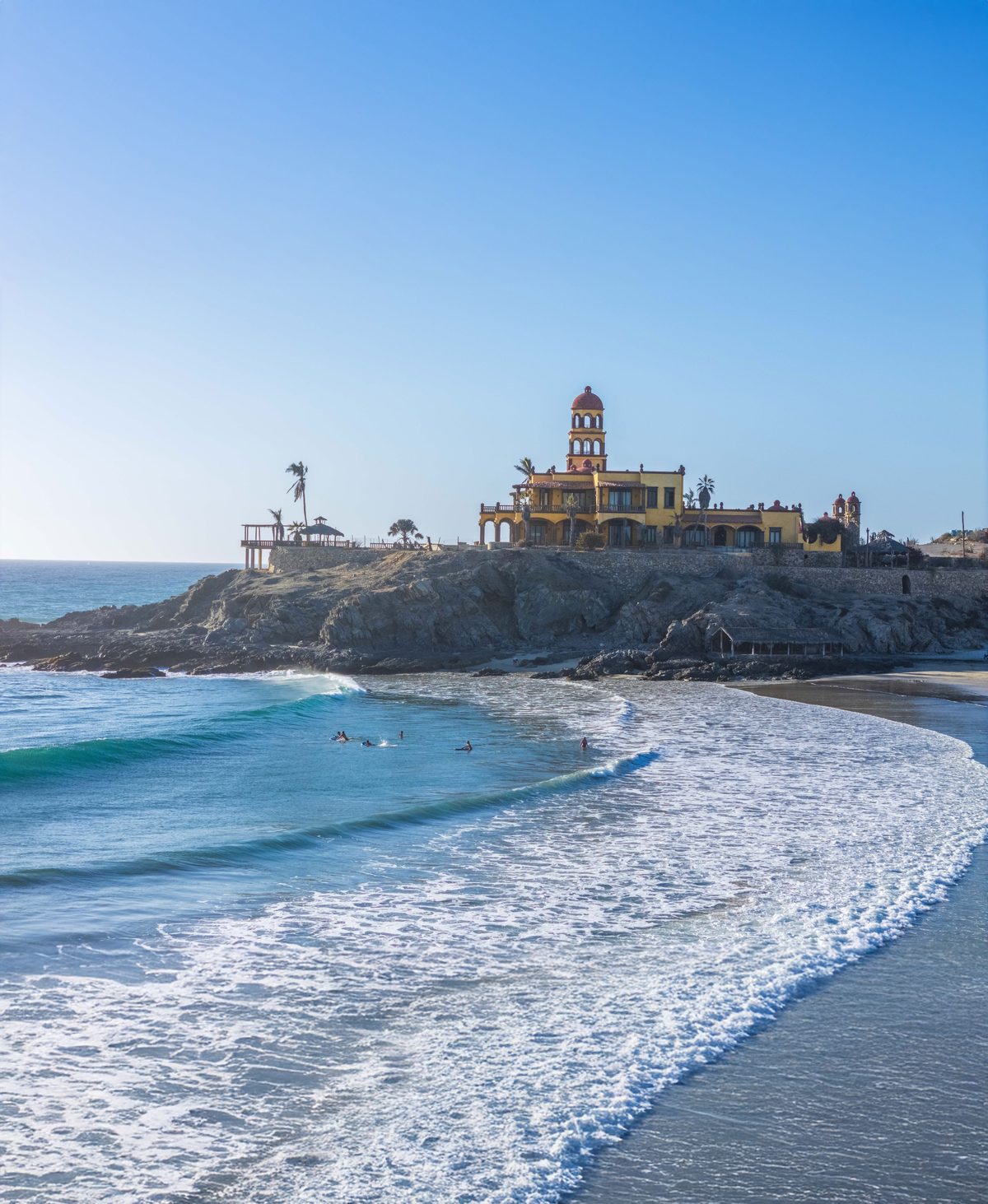
Los Cabos sits where two seas meet, and the coastline changes character depending on which one a beach faces. On the Sea of Cortez side — the corridor between Cabo San Lucas and San José del Cabo — sheltered bays like Chileno and Santa María are calm enough for swimming and snorkelling, their clear water protected from open-ocean swell. On the Pacific side, the same coastline turns rougher: steep drop-offs and a strong undertow make most Pacific beaches unsafe for swimming, even on a calm-looking day. Both are public. Mexican federal law keeps every beach open to anyone up to the high-tide line, regardless of what sits behind it, so no resort or residence can legally claim a stretch of sand as its own. What a property actually buys is proximity — the walk to the water, and whatever amenities come with it — not the beach itself.
Two coasts, two beaches
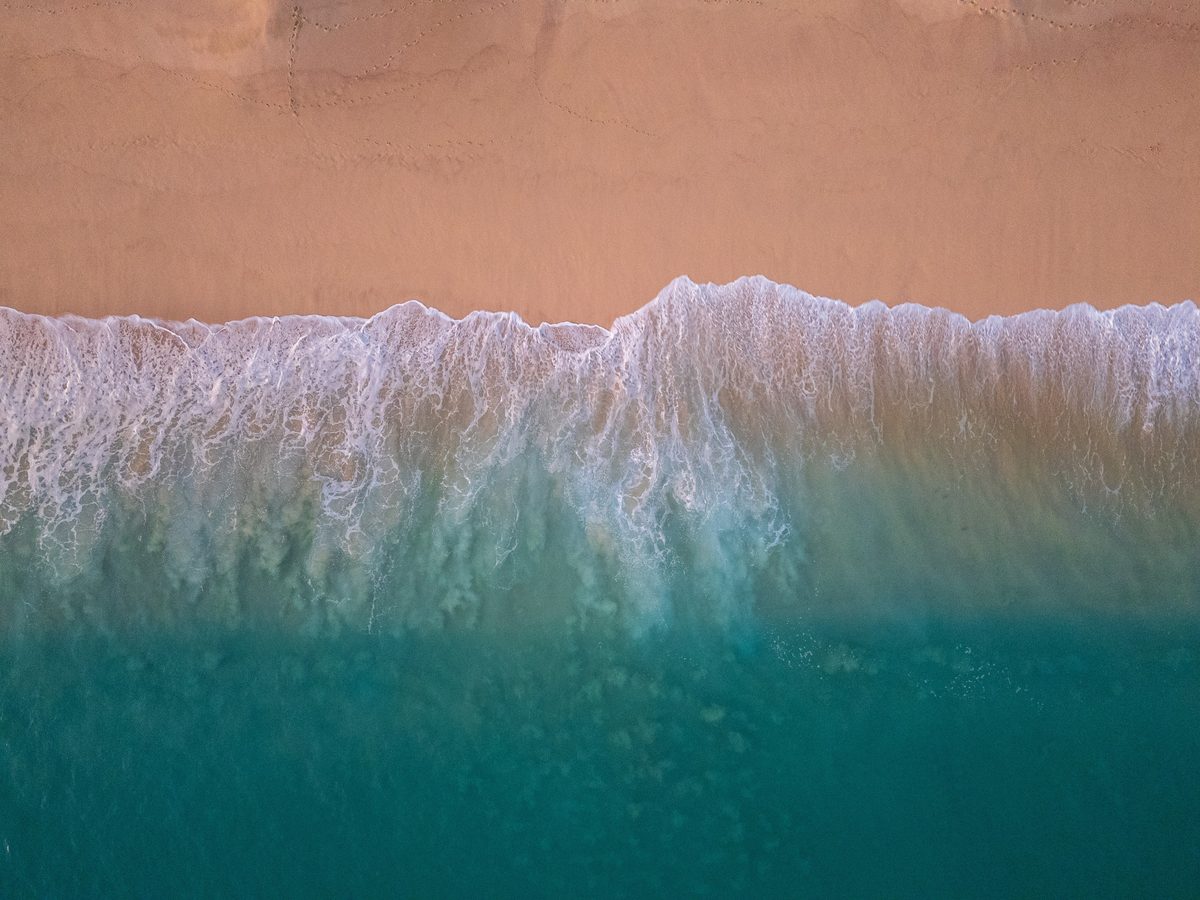
The difference is geological as much as anything: the Sea of Cortez is a sheltered inland sea, while the Pacific is open ocean with nothing between it and open water for thousands of miles. Cerritos, on the Pacific side, is known for surf rather than swimming; Chileno and Santa María, both Blue Flag–certified, sit on the calmer side and draw snorkellers instead.
Pacific surf, a different kind of beach day
On the water
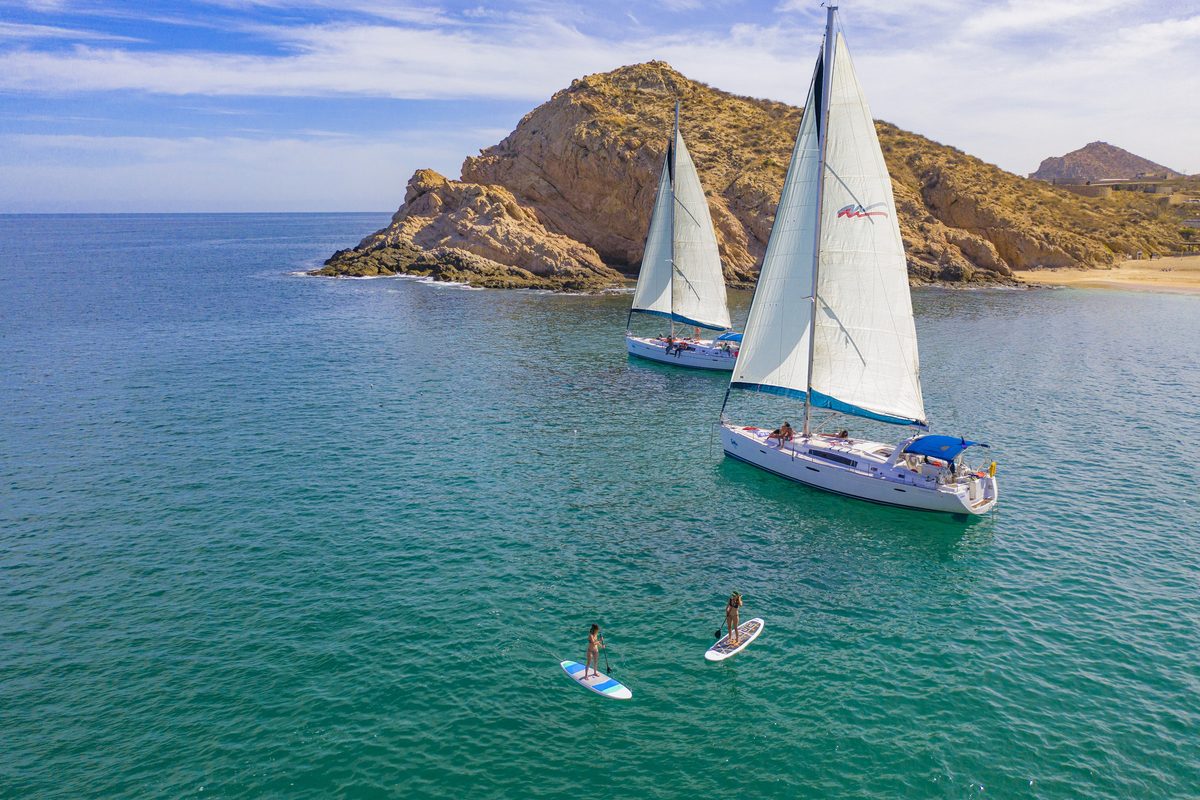
In the calmer bays, a morning on the water is as easy as walking down from a beach club: paddleboards and small sailboats go out without much planning, and the visibility is usually good enough for snorkelling straight off the sand.
A sheltered bay, calm enough for a paddleboard
What "private beach" actually means
No beach in Mexico can be privately owned — the sand itself, up to the federal maritime zone line, stays public property by law. A resort or residence can hold a concession to operate chairs or a restaurant on it, but not to close it off. For a buyer, the real question isn't whether a beach is private; it's how direct the access is, and what's maintained along the way.
Sunrise over Médano, from the beach’s edge
In Mexico, the sand itself is never anyone's alone. What a home actually buys is the walk to it.
A climate that allows most of the year outdoors turns wellness into a daily habit here rather than an occasional retreat. Mornings tend to start early, before the heat builds — a swim, a walk, a ride along a desert trail — and the slower parts of the day follow in the afternoon: a treatment, a long lunch, a swim at dusk. Resort spas anchor the picture, often built outdoors or half-outdoors to use the climate rather than work against it, but independent studios and gyms fill in the rest. The desert itself is part of the offering too, not just the ocean — trails for hiking and biking run through terrain that looks nothing like a typical resort backdrop. None of it requires much planning. The rhythm is closer to a standing routine than a scheduled activity.
Spas and treatments
Resort spas here tend to work with the outdoors rather than seal it out — treatment rooms open to a garden, massage tables set under a canopy of leaves. Independent studios fill out the rest of the picture, from yoga to more clinical wellness treatments, serving residents as much as hotel guests.
An outdoor treatment, shaded by tropical foliage
Movement in the open air
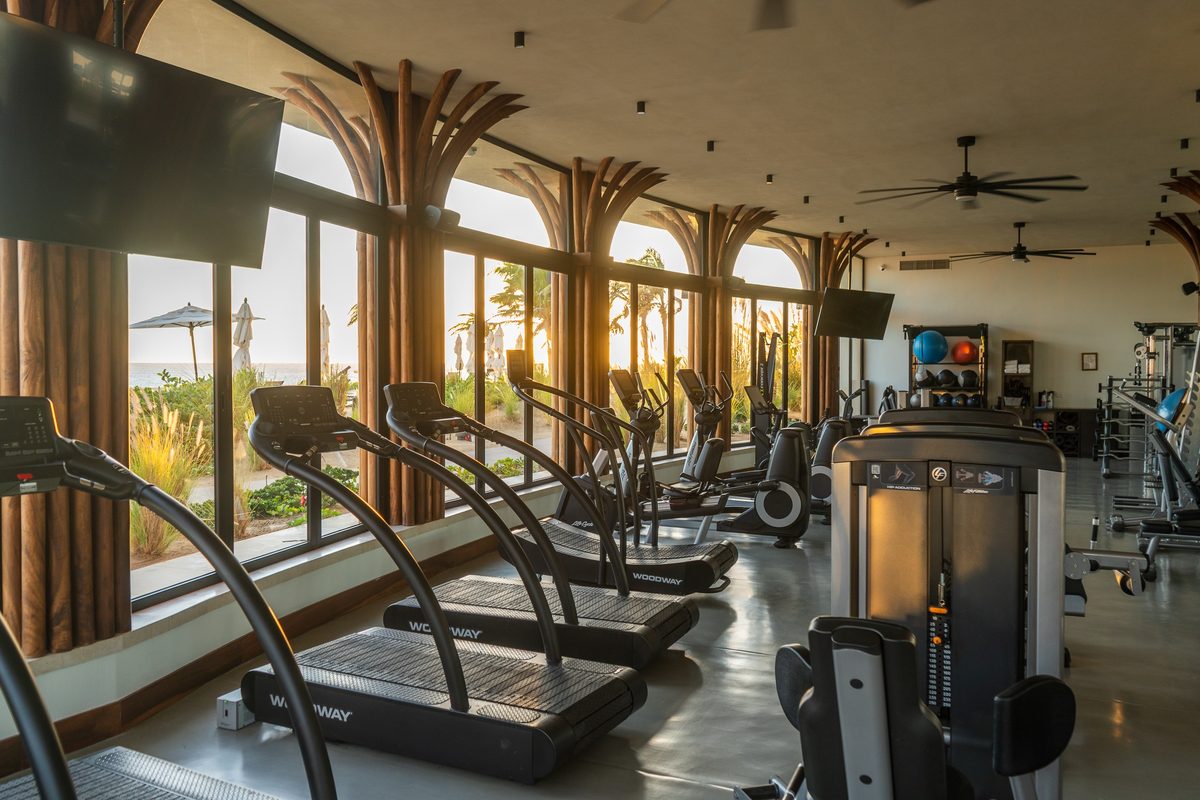
Outside the pool and the spa, the desert supplies most of the rest: paved and unpaved trails for biking and hiking run through cactus-lined terrain a short ride from the coast. Golf and swimming count as much as a formal workout — the point is staying in motion, not logging a session.
A desert trail, cactus on either side
Slowing down
The quieter half of the day is just as deliberate: a pool at twilight, dinner that starts late, an evening with nowhere particular to be. It's less a schedule than an absence of one — the version of wellness that shows up in how unhurried a place feels rather than in a specific class or treatment.
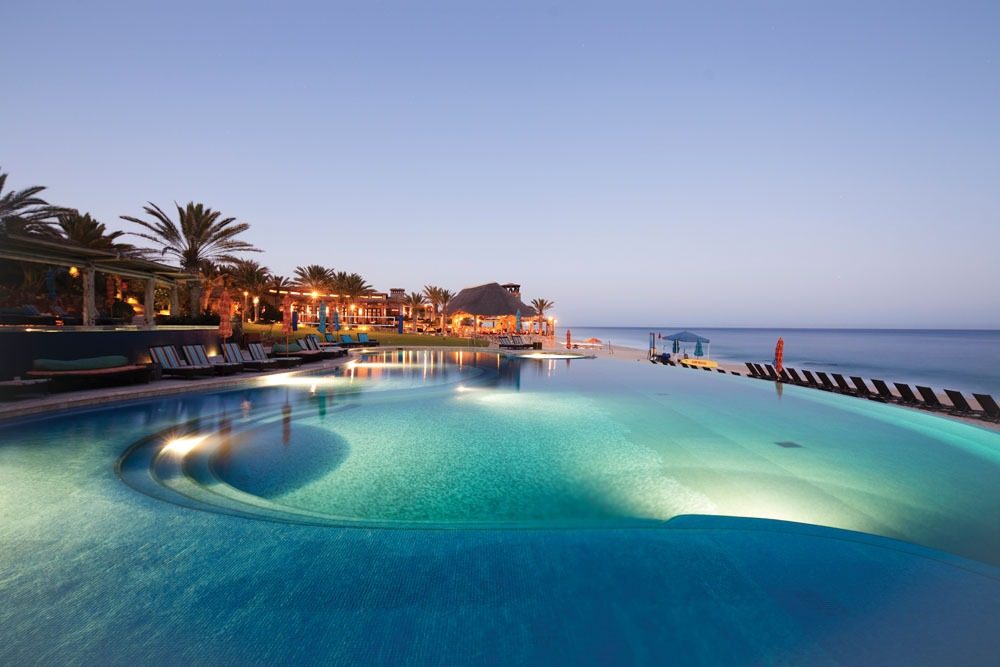
A quiet pool at the end of the day
The best wellness here has no itinerary — a swim before breakfast, a walk after dinner, and not much in between.
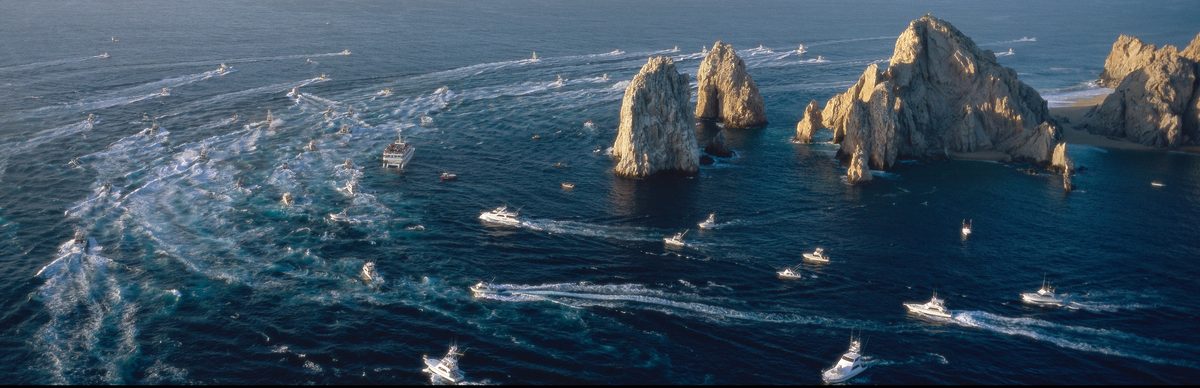
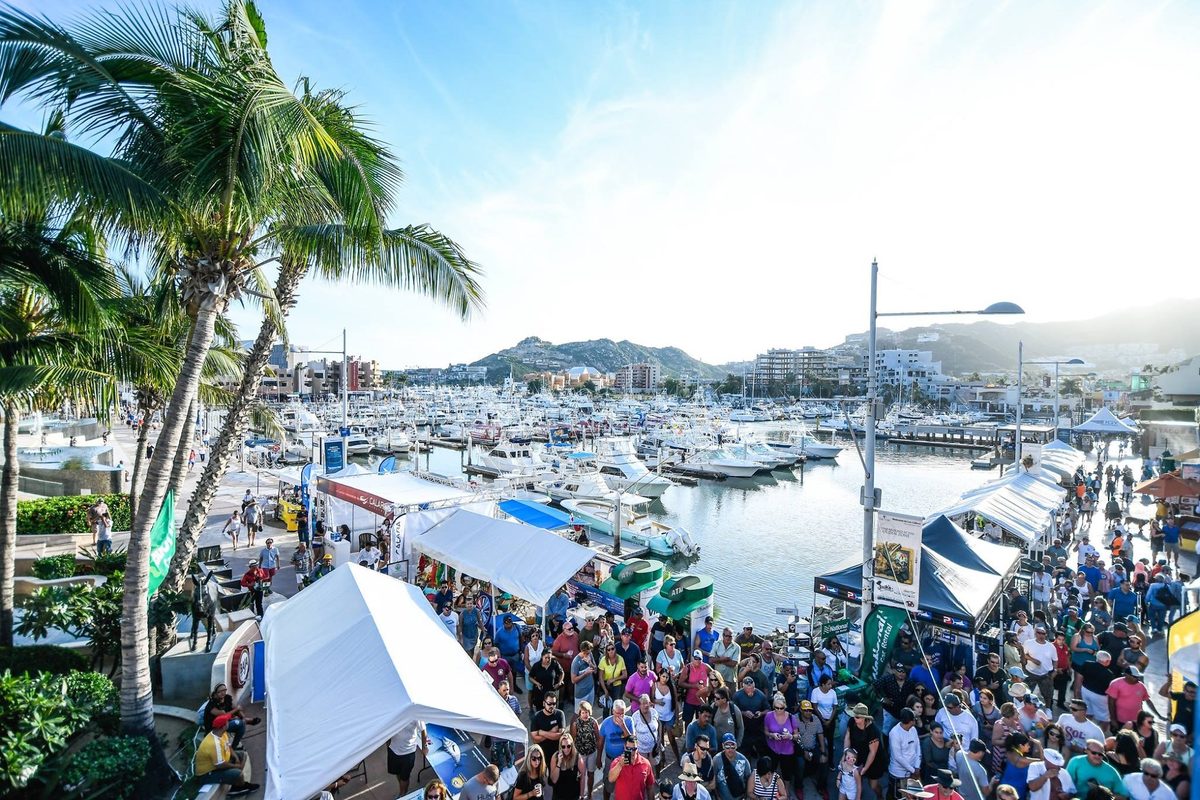
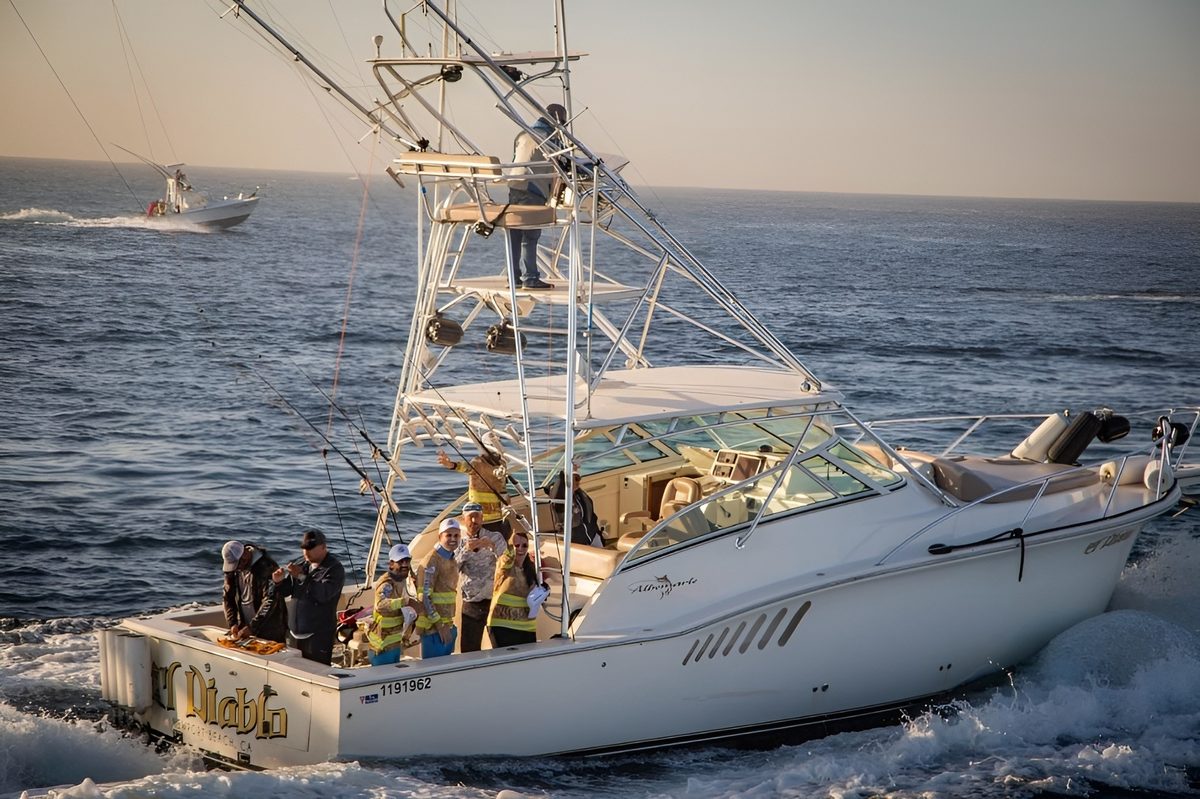
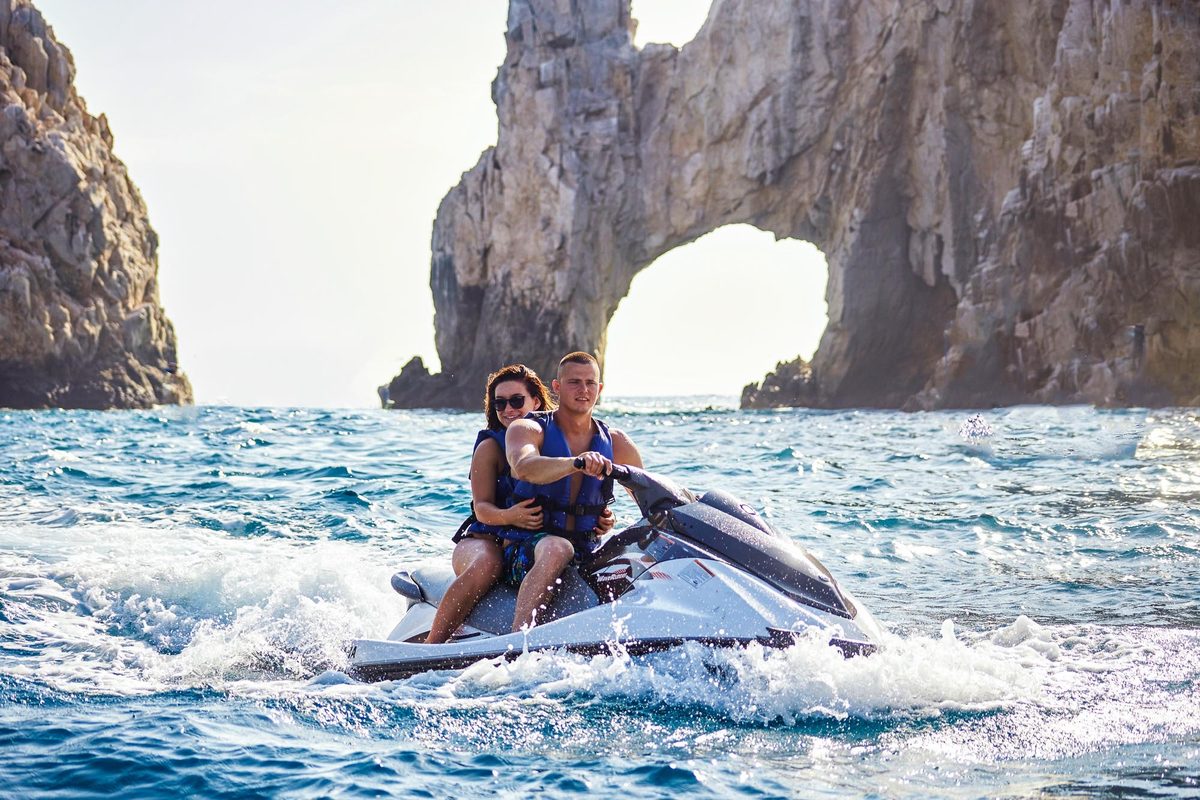
Los Cabos sits at the tip of a peninsula where the Pacific and the Sea of Cortez meet, and that convergence makes it one of the world's most concentrated sportfishing grounds — striped, blue and black marlin, dorado, tuna and more, often within a short run from the marina. Cabo San Lucas's marina is the centre of it, fleets of sportfishing boats heading out before sunrise and returning through the afternoon, their catch weighed and sometimes photographed at the dock. The calendar includes some of the sport's biggest tournaments: Bisbee's Black & Blue, run out of Cabo San Lucas for decades, draws teams from across the world and is, by its own account, among the richest billfish tournaments anywhere. Beyond fishing, the same marinas serve every kind of boat, from a half-day charter to a permanent berth, and the water itself — calm enough on the Sea of Cortez side — supports everything from sailing to a slow cruise past the Arch.
The grounds
The deep water close to shore is part of what makes the fishing here unusual — boats can reach serious depth within a short run, rather than hours offshore. Striped marlin are the most consistent target through much of the year, with blue and black marlin, tuna and dorado filling out the season.
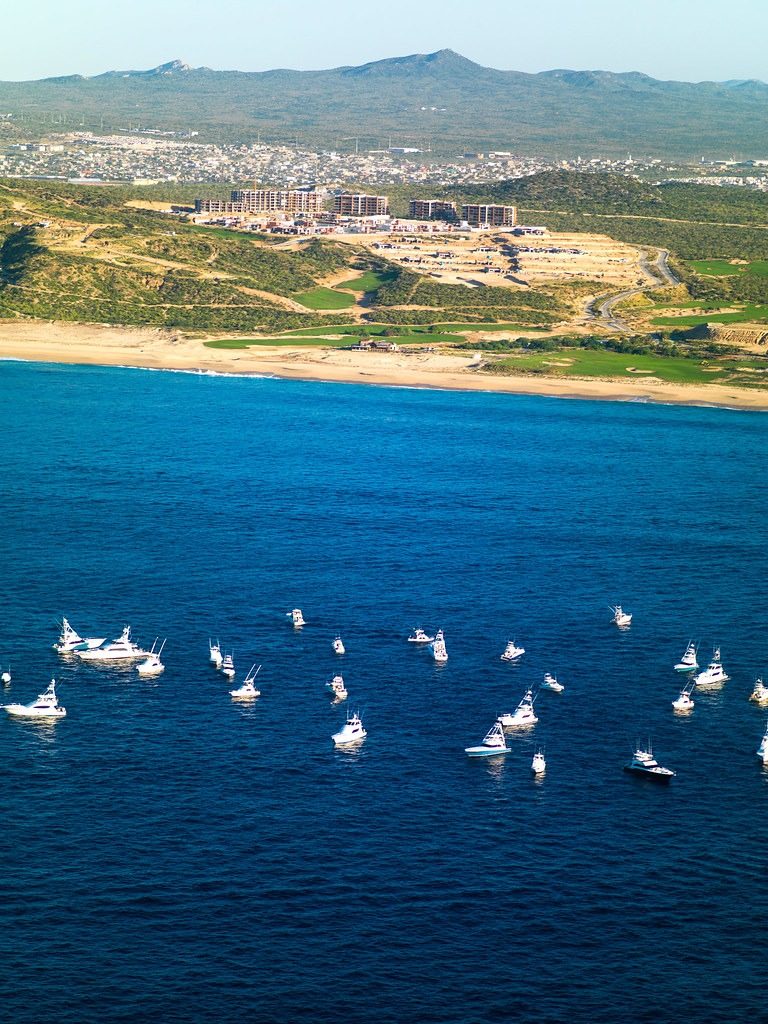
The fleet at anchor, along the corridor
The tournaments
Tournament season turns the marina into its own event: boats, crowds and vendor tents fill the dock, and the week builds toward a weigh-in that draws spectators as much as competitors. Bisbee's Black & Blue, held every October, is the best known of them.
Tournament week at the marina
Boats and ownership
For owners who want a boat as part of the picture, the marinas here support everything from a shared charter arrangement to a private, permanently berthed yacht. Slip ownership, leasing and maintenance arrangements vary by marina, so it's worth asking directly how a given berth is held before assuming it transfers with a purchase.
Heading in after a morning offshore
The marina empties before sunrise and fills again by early afternoon — the whole day organised around the tide and the fish.
Approximate nonstop flight time to Los Cabos (SJD) from major gateway cities
Los Cabos International Airport (SJD), near San José del Cabo, is the region's main gateway, with direct flights from dozens of cities across North America and beyond. For an owner who travels often, the ease of that connection is part of what makes a second home practical rather than aspirational — a flight measured in hours, not a full day of connections. The airport also supports private aviation: fixed-base operators serve private and chartered aircraft alongside commercial traffic, so arriving on a private jet is a normal, if unremarkable, part of how many owners come and go. None of this is unique to Los Cabos, but it matters more here than in a market with a less convenient airport, since the destination's appeal depends partly on how easy it is to actually get to.
Getting here
As the diagram above shows, most major gateway cities on the Pacific and Central time zones reach SJD nonstop in well under half a day — Los Angeles is the shortest common run, at around two hours. A handful of cities, Miami among them, don't currently have nonstop service at all. Flight times and route availability shift by season and carrier, so it's worth checking current schedules directly rather than assuming last year's routes still run.
Arriving privately
Alongside its commercial terminal, SJD supports private and chartered aircraft, a detail that matters more to frequent owners than to someone visiting once a year. Exact services, hours and operators change, so this is worth confirming directly with an operator rather than assuming.
The easiest second home is the one that's actually easy to get to.
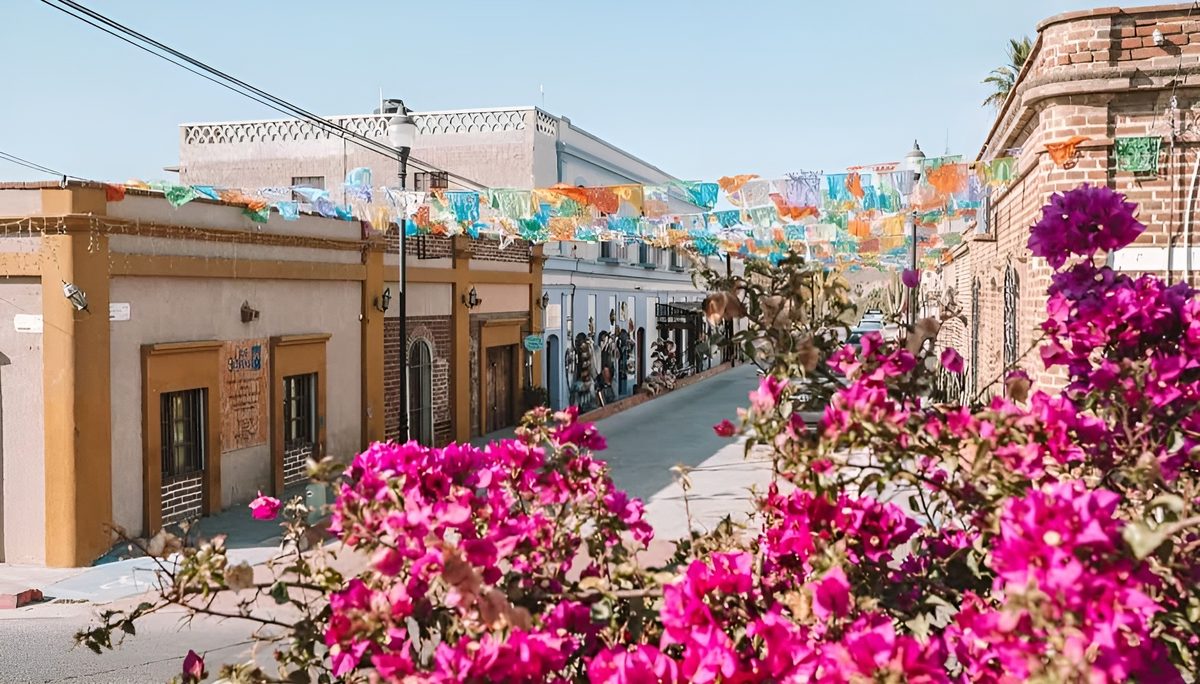
Los Cabos is really two towns joined by a corridor, and they read differently. Cabo San Lucas is the livelier of the two, built around its marina and nightlife. San José del Cabo keeps an older centre and a recognised gallery district, where Thursday evenings from November through June bring an Art Walk through the streets behind the church near Plaza Mijares — free, public, and running since 2006. An hour up the Pacific coast, Todos Santos offers a different pace again: a federally designated Pueblo Mágico known for its own arts scene and colonial-era streets. Its most-repeated story — that the town's Hotel California inspired the Eagles song of the same name — isn't true; the hotel predates the song by decades, and the band has publicly disputed any connection. What's real is a settled international community that gathers around golf, boats, food and a shared interest in a place many chose rather than inherited.
Fiestas and the open road
Local life isn't only resort-paced. The Baja 1000, one of off-road racing's best-known events, runs through the Baja California peninsula each year, drawing teams and spectators who treat the desert itself as the draw. It's a reminder that the region's identity extends well past its beaches and golf courses, into a wider Baja culture most visitors never see.
The Baja 1000, running through the desert
Evenings in town
After dark, Cabo San Lucas and San José del Cabo feel like different places again: the marina and its restaurants stay lively well into the night, while San José settles into a quieter, more residential pace. Which one suits a given evening — or a given life — is a useful thing to test in person before deciding where to buy.
Cabo San Lucas, after dark
Visitor traditions
Some experiences are aimed squarely at visitors rather than residents — a camel ride along the beach, a sunset cruise past the Arch — and they're worth trying once, if only to understand what a first-time guest sees. They're rarely how someone who actually lives here spends a Tuesday.
A camel ride along the beach, a visitor tradition
San José keeps its own pace after dark; Cabo San Lucas rarely slows down at all.
Golf at the water’s edge, long dinners and mornings at the marina begin at a front door. A hand-picked selection of residences is arranged by the way of living it supports: quiet or social, resort or residential, ocean or golf.